

In Indian retail, wedding season is not a peak. It is a truth serum.
Between October and February, every weakness hidden through the year surfaces – quietly at first, then violently. No SOP can mask it. No festive lighting can soften it.
Because Indian wedding retail is not transactional commerce. It is emotion-heavy, reputation-sensitive, and unforgiving.
Why Wedding Season is a Leadership Reckoning
On regular days, stores function on muscle memory. During wedding season, they function on judgement. Judgement under:
- Family pressure
- Gold rate volatility
- Time-bound rituals
- Social status anxiety
- Multiple decision-makers at the counter
This is where leadership – not training – decides outcomes. Yet most retailers prepare as if wedding season is only a volume problem.
The Dangerous Myth: “Good Sellers Will Manage It”
Many organisations believe: “Our best people will step up during rush.”
What actually happens:
- Star sellers protect their own customers
- Juniors panic or go silent
- Supervisors avoid confrontation
- Managers firefight instead of lead
Sales still happen. But trust fractures invisibly.
Wedding customers don’t complain immediately. They remember. And they talk.
The Invisible Costs Nobody Measures
Poor people readiness during wedding season creates costs that don’t appear on P&L immediately:
- Emotional exhaustion leading to resignations in March–April
- SOP dilution becoming permanent behaviour
- High-potential juniors losing confidence
- Managers associating leadership with stress and blame
By the time leadership notices, the damage is already embedded.
Indian Wedding Customers Need More Than Product Experts
A wedding buyer walks in with:
- Parents worrying about budgets
- In-laws judging status
- Couples torn between trends and tradition
This environment demands:
- Emotional containment
- Conflict de-escalation
- Clear authority boundaries
- Calm decision-making
No amount of product knowledge compensates for poor emotional leadership.
The Ascend Lens: Wedding Season Is a Leadership Simulation
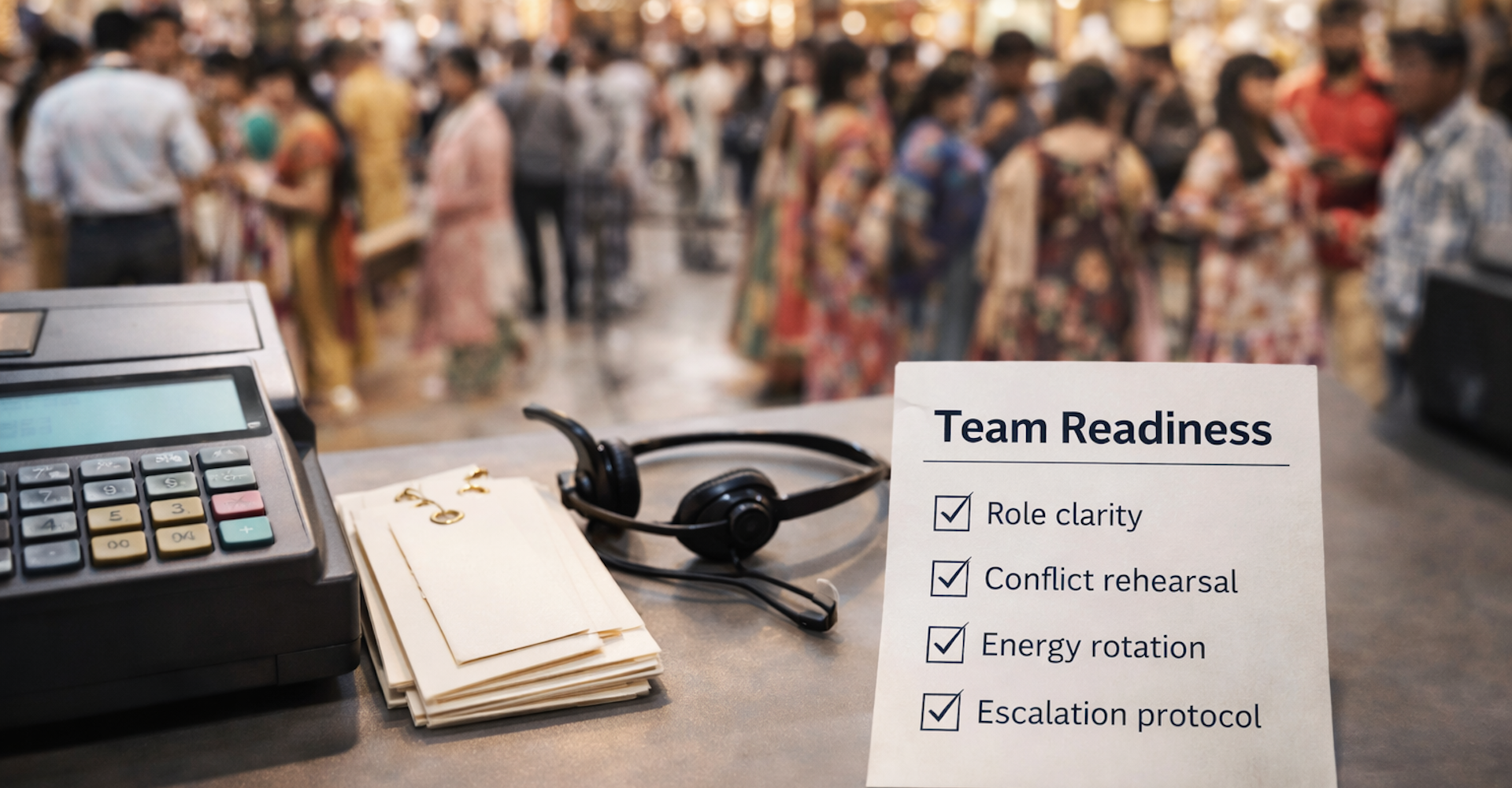
At Ascend, wedding readiness is treated as a live leadership assessment, not a sales sprint. True readiness includes:
- Role discipline under pressure: Who sells, who supports, who resolves – decided before chaos begins.
- Conflict rehearsal, not hope: Practising rate arguments, delivery escalations, and family disputes.
- Energy management, not endurance tests: Fatigue rotation is leadership responsibility, not staff weakness.
- Daily micro-alignment: 10–15 minute huddles to reset priorities, not motivate theatrically.
- Psychological safety: Staff must know escalation will protect them, not punish them.
The Brands That Get This Right
High-maturity retailers don’t ask: “How much can we sell this season?”
They ask: “How intact will our team be after this season ends?”
Because leadership isn’t tested on the busiest day. It’s tested the day after, when teams either return stronger or broken.
The Question That Separates Mature Retailers from Fragile Ones
Before the next wedding rush, ask this honestly:
If pressure doubles tomorrow, will my leadership system hold or collapse into heroics?
If the answer is heroics, you’re not prepared for wedding season. You’re merely hoping to survive it.
And Before Weddings Come Diwali & Dussehra – India’s First Stress Test
For fashion retail in India, the leadership test doesn’t begin with weddings.
It begins earlier i.e. with Dussehra and Diwali. These festivals don’t just drive footfall; they set the emotional and operational tone for the entire season ahead.
Unlike weddings, festival customers:
- Arrive in surges, not appointments
- Make faster decisions
- Expect instant gratification
- Are less forgiving about queues, billing delays, or confusion
If leadership collapses during Diwali, it rarely recovers by wedding season.
Festivals Expose a Different Leadership Failure
During Dussehra and Diwali, stores face:
- Extreme weekend crowd compression
- Heavy discount conversations
- Staff stretched across trial rooms, billing, replenishment, and VM
- First-time festive shoppers judging brand credibility
This is where poor role clarity, weak delegation, and absent floor leadership explode publicly.
Unlike weddings, festival failures are immediate:
- Walk-outs increase
- Impulse buyers disappear
- Staff confidence erodes early in the season
By the time wedding buyers arrive, the team is already fatigued.
The Ascend Insight: Festivals Are Season Openers, Not Side Events
High-maturity fashion retailers treat Diwali and Dussehra as:
- Leadership warm-up rounds, not revenue spikes
- Team discipline tests, not discount events
- Readiness audits, not celebrations
They use these festivals to:
- Stress-test supervisors
- Observe decision-making under pressure
- Identify early burnout signals
- Fix leadership gaps before wedding season begins
Because once weddings start, correction is too late.
The Final Question Leaders Must Ask
Before the festive lights go up, ask this – not emotionally, but structurally:
If Diwali pressure hits this weekend, will my team function as a system or scatter as individuals?
If the answer isn’t confidence, then wedding season will only magnify the cracks.
In Indian retail, festivals don’t just drive sales. They reveal leadership truth. And leadership truth, once revealed, cannot be ignored.